Citi's markets business was transformed by a British man who recently disappeared
Citi's markets business is better than it used to be. Speaking at last week's investor day, Andy Morton, the US bank's popular head of markets, observed that in the dark days of 2023, the return on average tangible common equity in the business was only 8%. In the first quarter of 2021 it was 19%.
Times have changed.
💥Follow us on WhatsApp for news alerts.💥
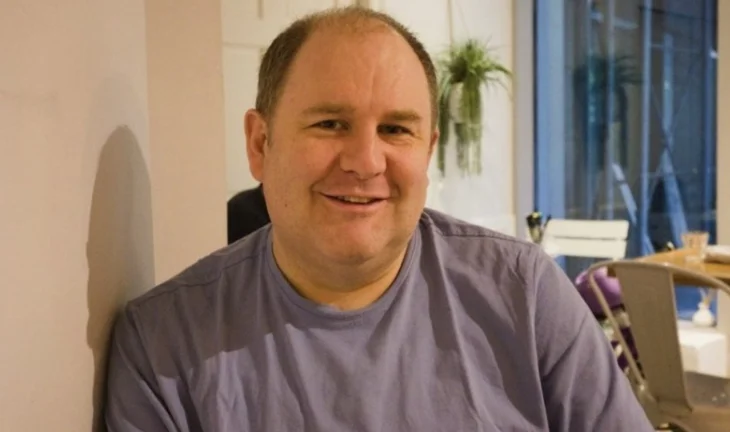
They have done so partly thanks to the work of a group of people in London. Key among them was Jon Lofthouse, who we understand has recently left the US bank after a career of nearly 30 years. Lofthouse has possibly retired. He was latterly Citi's chief information officer, but his current whereabouts are unknown. Lofthouse did not respond to a request to comment for this article and Citi declined to comment on his exit.
Lofthouse was a key figure in the development of XiNG, a technology platform which Morton said last week has had the "biggest single impact" on Citi's markets business. "It started as an analytics library just developed by our quant group," said Morton of XiNG. In XiNG, every fixed income asset class has its own calculation library, declared Morton. These libraries are compatible and meet rigorous common standards. Morton said the technology behind XiNG is "so cool" that, "we can write a 20-line Python program that runs a scenario stress test on our entire markets trading portfolio, 20 lines of Python, that's it."
Thanks to XiNG, Morton said Citi has been able to leapfrog competitors with their "big box" solutions. "Technology is a huge competitive advantage for us," he enthused.
John Lofthouse's role in developing Xing is well-documented. Writing this time last year, WatersTechnology said that Citi tasked a young Lofthouse with building a system to understand its risk exposure after the 2008 financial crisis. At that time, Lofthouse was based in London. Together with his team of technologists and quants, he reportedly spent years developing the XiNG platform and then building apps on top of it. Risk reported that XiNG was rolled out to the whole risk function in 2021 and then the whole Citi finance function in 2023. "Now we can start looking at use cases front-to-back – not just in trading, but in our risk and finance division,” Lofthouse told Risk. Every trade that Citi does now goes through XiNG, he added.
Morton and Lofthouse worked closely together during the birth of the precocious platform child. “Andy Morton—who ran rates at the time and is now head of Markets—and I were in rooms next door to one another," Lofthouse told WatersTechnology of the early years. "The quant team was 10 feet away, and the tech team was in London or this office. We were working together physically for much of the time.”
Thanks to XiNG, Morton told Risk that Citi has been able to run internal risk weighted asset (RWA) auctions, the first of which was held in 2024. Under the new auctions, Citi businesses that aren't using all their RWAs are able to auction them off to bidders elsewhere in its markets business. This has presumably helped generate Citi's new 19% RoTCE.
In the circumstances, Lofthouse might seem a desirable hire for another bank. Developers of similar risk-pricing systems at rival banks have made circa $100m running their own companies. Sam Wisnia, the former deputy CIO at failed hedge fund Eisler, previously developed the risk pricing system for Deutsche Bank and is now selling a similar system to other hedge funds.
It's not clear whether Morton misses his former colleague. Lofthouse wasn't mentioned in last week's presentation. Citi has already replaced him as CIO: Brian Saluzzo joined from Google last week. Saluzzo was once a co-head of tech infrastructure at Goldman Sachs.
Have a confidential story, tip, or comment you’d like to share? Contact: +44 7537 182250 (SMS, Whatsapp or voicemail). Telegram: @SarahButcher. Signal: sarahbutcher.22 Click here to fill in our anonymous form, or email editortips@efinancialcareers.com.
Bear with us if you leave a comment at the bottom of this article: comments are moderated intermittently by human beings. Sometimes these humans might be asleep, or away from their desks, so it may take a while for your comment to appear. You must take sole responsibility for comments you post on this site. We will take reasonable steps to weed out anything that we consider to be offensive or inappropriate.